Choosing
Small first tattoo ideas that age well
Good small first tattoo ideas start with a clear shape: a leaf, a simple flower, a small animal silhouette, a short word, or a familiar symbol. Choose enough size and space for the design to stay readable, and ask to see your artist’s healed examples. No design can promise to look unchanged forever.
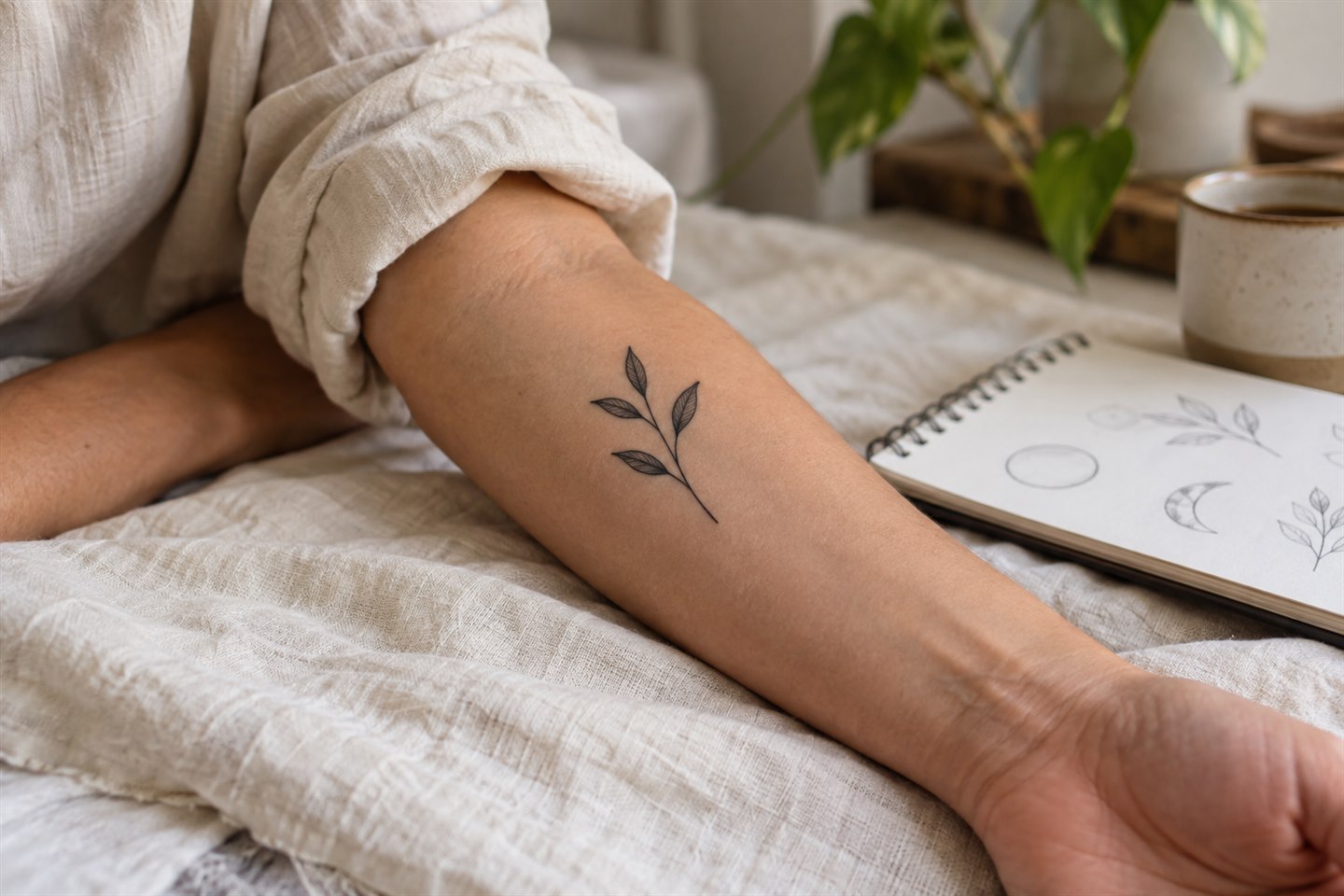
Start with one recognizable shape
Think about what you want someone to recognize from a few feet away. A crescent moon, a single stem, or the outline of your dog’s ears gives the artist one main job. A miniature landscape with a house, trees, stars, and lettering gives them several competing jobs in the same space.
Try six starting points: one leaf with a visible stem; a three-petal flower; a simple mountain outline; a cat silhouette; a small geometric shape; or a symbol connected to a hobby you already enjoy. These are directions for a consultation, not a catalog of designs guaranteed to last.
Pick two ideas, then write one sentence about why you want each. “I like the shape of this fern” is enough. You do not need to invent a dramatic life story to justify a design you enjoy.
If your references come from another artist’s work, explain which qualities you like: the weight of the line, the open spaces, or the curved composition. Ask for an original design rather than a direct copy.
Give the details enough space
Bring a size range in inches. For a leaf on your outer upper arm, you might ask to compare a two-inch and a three-inch stencil. Those are useful comparison sizes, not universal minimums. The artist should decide what supports that particular drawing.
Ask which details they would remove at the smaller size. If they cannot keep five tiny veins distinct, a simpler leaf might communicate the same idea better. Let the design change with its scale rather than shrinking every element equally.
For lettering, ask to see the actual word at actual size. Check the spaces inside letters, the distance between letters, and whether flourishes obscure the spelling. Read it from arm’s length without zooming your phone.
“Fine line” describes an approach; it is not a lifetime guarantee. Ask for healed work in that style and at a comparable scale. A fresh, brightly lit close-up cannot answer every question about how an older tattoo looks.
Match the drawing to the body area
A narrow stem can suit a forearm because it follows the length of the area. A round symbol may sit neatly on an outer upper arm. A small design on an outer thigh gives you a different view and different clothing coverage. Start with the relationship between shape and space.
Ask your artist to show two positions a few inches apart. A design can look centered while you stand with your arms down and appear different when you lift them. Check the stencil in your normal posture, not only the pose used for a photograph.
Look at the outline your clothes create around it. Does a sleeve cut through the design? Does a waistband sit directly over the spot? Those practical details can decide between two placements you otherwise like equally.
If you want room for future tattoos, say so now. You do not need a complete sleeve plan. You can simply ask whether putting this piece in the middle of the area will make a larger future composition harder to arrange.
Ask for evidence from healed work
Make a shortlist of two or three artists who regularly make the kind of small tattoo you want. Look for whole-body-area photos as well as close-ups, with healed dates or context where available. You are comparing their decisions, not counting followers.
Ask: “Do you have a healed example around this size?” Follow with: “What would you change in my reference to keep it readable?” A useful answer names a specific line, gap, or detail. “Everything looks perfect forever” does not help you make an informed choice.
Long-term care matters too. The American Academy of Dermatology notes that ultraviolet light can fade some tattoo inks. Follow appropriate sun protection once the tattoo has healed; a clever drawing does not remove that need.
Keep a screenshot of the agreed size and reference brief. If the artist suggests a change at the appointment, discuss the reason. You can accept a sensible adjustment without letting a two-inch idea quietly become a five-inch piece you never wanted.
Test the size before you pay a deposit
Use Inkbox if you want to try a temporary version before committing. Treat it as a test of visibility, placement, and how the idea feels in everyday life. It cannot predict permanent ink, needle sensation, or healing.
If the available temporary design differs from your final drawing, choose something with a similar outline and dimensions. A tiny star does not tell you much about how a three-inch flower will occupy your forearm.
For several ordinary days, check it while getting dressed, working, and looking in a full-length mirror. Take one straight-on photo and one photo in your normal posture. Write down what you actually notice rather than asking ten people to vote.
Temporary products can cause skin reactions too, according to the FDA’s temporary tattoo fact sheet. Follow the product directions. A comfortable trial is useful information about your preference, not proof that permanent tattooing will be risk-free.
A few more questions
What is a good small first tattoo?
A single readable shape is a useful starting point: a leaf, flower, silhouette, or simple symbol. Choose something you enjoy, then ask an artist to adapt its size and detail to the placement.
How small is too small for a tattoo?
There is no reliable minimum that fits every design. Ask your artist to show the smallest version they can support with comparable healed examples.
Do small tattoos age badly?
Small size alone does not tell you how a particular tattoo will look later. Compare healed work, discuss spacing and detail, and avoid anyone promising an unchanged result forever.
Should my first tattoo have a meaning?
It can, but liking the design is also a reason to choose it. You do not owe anyone a personal story or an explanation of your life.
Can I test a small tattoo before getting it?
Yes, a temporary version can help you judge scale and visibility. It cannot show how the permanent tattoo will feel or heal.