Pain & fear
Does a first tattoo hurt?
Yes, a first tattoo hurts, but the sensation varies with the person, placement, design, and length of the session. Expect discomfort rather than a painless appointment. You can choose a manageable design, agree on breaks, and tell your artist when you need to stop.
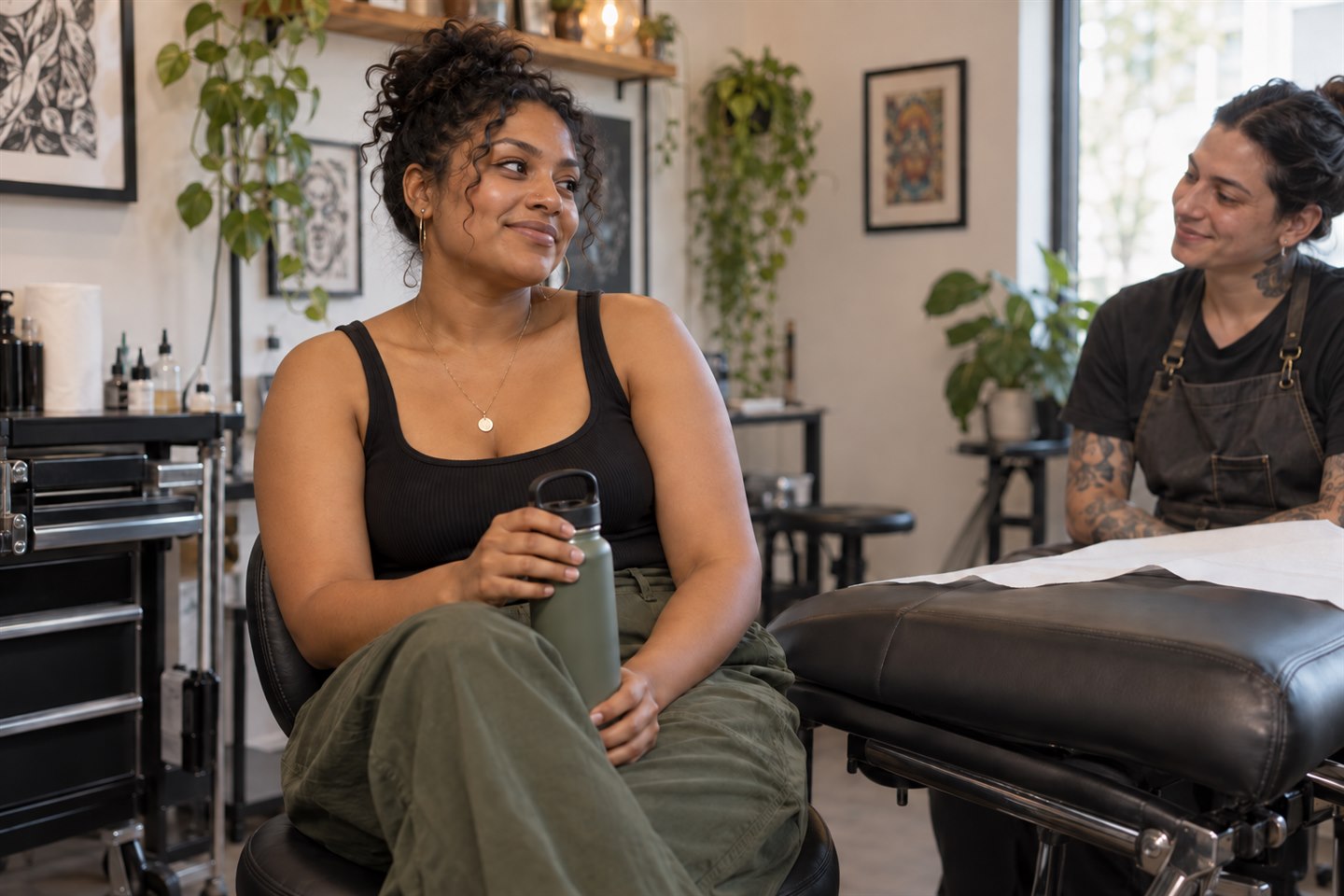
What the needle actually feels like
A tattoo is not one long injection. The artist moves across a small area, lifts the machine, wipes, and starts another pass. Some people describe that as scratching, a sharp sting, or a hot, persistent irritation. Those comparisons help you talk about it; they cannot predict your exact experience.
Mayo Clinic explains that tattoo needles repeatedly puncture skin and that the process causes pain and some bleeding. A first tattoo is still a tattoo, even if the design is only an inch wide.
Ask what the session includes: outline, shading, color, or repeated work in the same spot. Do not assume shading will definitely feel better than lines. Ask how the artist usually checks in and how you should request a pause.
You do not need to watch the machine. You can look at a fixed point, listen to something if the studio allows it, or talk. Keep enough attention available to hear the artist’s instructions.
Placement and time change the appointment
If you are choosing between a small outer-upper-arm design and a larger rib piece, discuss comfort before deciding. Hammersmith Tattoo’s artist FAQ describes upper arms and thighs as commonly more comfortable than ribs, spine, or feet. That is studio guidance, not a clinical ranking.
The exact spot matters. “Arm tattoo” can mean the fleshy outside of the upper arm, the elbow, or the wrist. Send a photo or mark the location during the consultation so you are discussing the same area.
Length matters to your plan, too. Ask for an estimated needle-on-skin time and the total appointment length. Drawing, positioning, setup, and breaks can make the visit longer than the tattooing itself.
You could ask about a design that fits a roughly one-hour session, but let the artist estimate honestly. Do not demand that they finish a two-hour design in one hour. Changing detail, scale, or placement is a better conversation than asking them to hurry.
Agree on a break plan before the first line
Try this sentence at the consultation: “This is my first tattoo, and pain is the part I’m worried about. How do we handle breaks?” It tells the artist what you need without apologizing for it.
Agree on a clear phrase such as “Can we pause?” Say it before moving. The artist needs to lift the machine safely before you sit up, adjust your arm, or reach for something.
Ask where you will sit or lie, whether your arm will be supported, and whether a cushion can help you hold the required position. A comfortable setup is worth discussing before the stencil is approved.
Choose a day with enough room afterward that you are not watching the clock. Put transport and payment in place before arriving. These choices do not remove the needle sensation; they remove a few separate things you would otherwise be worrying about.
If you feel faint, sick, or unusually unwell, tell the artist immediately. You are allowed to stop the appointment rather than negotiate with yourself in silence.
Numbing cream needs a conversation, not a surprise
Do not arrive with an unknown cream under plastic wrap. Ask the artist first, then check the exact product with a pharmacist or healthcare professional if you are considering it. An artist’s permission does not replace medical advice about a drug.
The FDA warns against certain numbing products marketed for tattooing. Its advice includes avoiding over-the-counter products above 4% lidocaine, large or damaged areas, and covering treated skin. Misuse can cause serious effects, including breathing problems and abnormal heart rhythms.
A label saying 4% is not a personal safety clearance. Read the complete directions, warnings, ingredients, and any restrictions with the professional helping you choose. Do not combine products or copy an application routine from a video.
If the artist says a product is incompatible with their process, decide on another comfort plan or another appointment. You can ask questions without turning the session into a test of who can tolerate the most pain. The product link on this page is optional, not a promise of painless tattooing.
Afterward, watch whether discomfort is improving
Before leaving, get written care instructions and a way to contact the studio. Ask what they expect for this tattoo and dressing, and which questions should go to a healthcare professional rather than the artist.
The American Academy of Dermatology distinguishes ordinary soreness from pain that continues or worsens, spreading redness, pus, fever, or chills. Those concerning signs need medical assessment, rather than another layer of product.
Make the first evening simple. Have your instructions, clean clothing, and the agreed care supplies ready so you do not have to make decisions at midnight. Take notes if there is something you want to ask about tomorrow.
Judge your appointment by whether you felt listened to and understood the plan, not by whether you stayed silent. Needing breaks does not make the tattoo less yours. If placement is still undecided, compare the first-tattoo placement shortlist before you book.
A few more questions
Does a small first tattoo hurt less?
A small design can mean a shorter session, but it still involves needles in the skin. Ask about its exact placement and detail, since tiny does not automatically mean easy.
Can I ask for a break during a tattoo?
Yes—agree on how to ask before the session starts. Tell the artist before moving so they can stop safely and help you adjust.
Will I cry during my first tattoo?
You might, or you might not; nobody can predict your response from a pain chart. Tell your artist what you are worried about and ask how they support a nervous first-timer.
Should I use numbing cream for my first tattoo?
Discuss the exact product with the artist and a pharmacist or healthcare professional before using it. Follow the linked FDA guidance rather than assuming a tattoo-branded cream is safe for you.
Is worsening tattoo pain normal?
Do not treat worsening pain as something you must endure. The American Academy of Dermatology lists continuing or worsening pain among possible infection signs; seek medical advice, especially with spreading redness, pus, or fever.