Aftercare
Tattoo aftercare, day by day
First tattoo aftercare starts with the instructions for your specific dressing: know when to remove it, how to clean the area, and whom to contact with problems. Keep the routine gentle and watch for worsening symptoms. Mad Rabbit balm is an option for fully healed tattoos, not a product to put on a fresh tattoo.
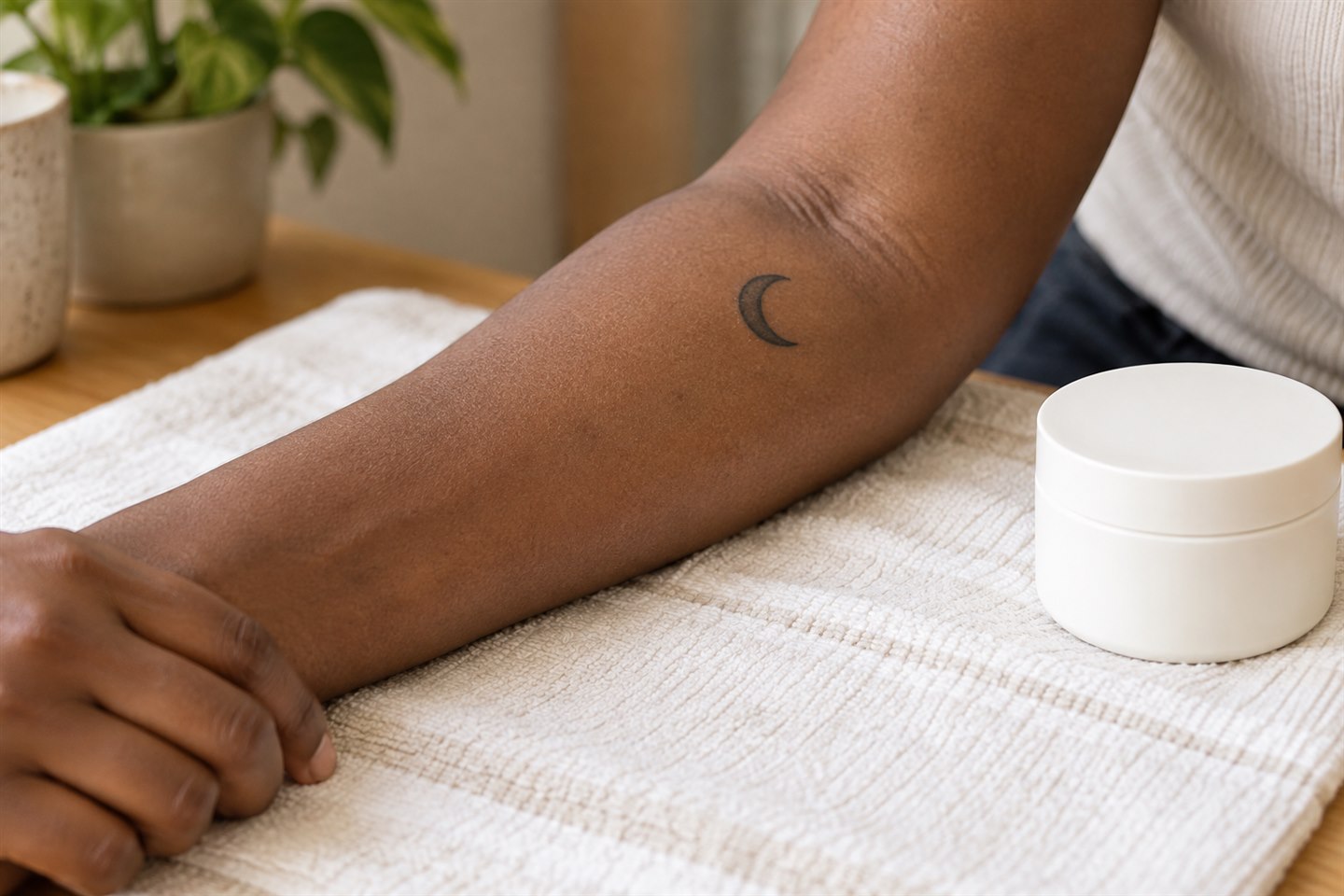
Day zero: leave with a written dressing plan
Before leaving, ask the artist to write down the dressing type, removal time, and what to do if it leaks, lifts, or becomes uncomfortable. A film dressing and another covering can have different directions. Do not combine timings from several unrelated online routines.
Ask them to demonstrate any step you do not understand. “Remove it gently” may leave you with questions about where to start, what to use, or whether another dressing follows. Get the answer while they can see the actual tattoo.
The European Academy of Dermatology and Venereology emphasizes clean hands, clean clothing, and following appropriate dressing instructions. It does not offer one universal routine that fits every tattoo.
Save the instructions and studio contact details in one note. Add the product names or materials they used if available. If medical assessment becomes necessary, those details can help you explain the situation without trying to reconstruct the appointment.
Days one to three: build a gentle routine
Use the artist’s removal instructions when the time comes. Do not peel a dressing early just to show someone the tattoo. If the dressing stops working as intended, contact the studio; seek medical advice for symptoms rather than waiting only for a studio reply.
Cleveland Clinic’s dermatologist aftercare guide recommends gentle washing with warm water and mild, fragrance-free soap, patting dry, and using a simple recommended moisturizer. Follow the directions that fit your dressing rather than washing underneath an intact film.
Choose a place at home where the routine is easy to follow. Keep the instructions nearby and separate the recommended supplies from the rest of your bathroom products. The goal is fewer decisions, not a shelf full of new treatments.
Ask what amount and frequency your artist recommends for the specific moisturizer. If that instruction is unclear, clarify it. Do not add several creams or a thick layer because the tattoo looks dramatic in the first few days.
Days four to fourteen: keep the routine steady
Use day numbers as reminders, not deadlines. Your tattoo may not match someone else’s photos from day seven. Look at how things are changing and ask for help if the pattern concerns you.
The American Academy of Dermatology describes itching, flaking, and some scabbing as possible parts of healing. The EADV advises against scratching, pulling loose skin, and swimming before complete healing.
Arrange your clothes and daily schedule around the care plan. If a work uniform or required equipment keeps interfering with the area, explain the exact problem to your artist. “My backpack strap sits on the top edge” is easier to answer than “Can I live normally?”
Check your instructions before exercise, a trip, or a water activity. A design looking less shiny does not automatically clear it for every activity. Ask about the particular activity and placement instead of treating the calendar as permission.
At any stage: know when to contact a clinician
Cleveland Clinic’s infection guidance lists signs including worsening pain, pus, fever, and chills. Get prompt medical assessment for suspected infection. A product change is not a substitute for diagnosis or treatment.
When you contact a clinician, say when the tattoo was done, where it is, what symptoms changed, and what care products or dressing you used. Tell them about any fever or feeling unwell. Ask where and how soon you should be seen.
For trouble breathing or another severe reaction, seek emergency care. The American Academy of Dermatology identifies breathing difficulty and severe swelling among signs requiring immediate help.
Notify the artist too, but keep the roles clear in your plan: the artist can provide appointment and material details; a clinician assesses a medical problem. Do not wait for a comment thread to decide whether you deserve care.
After full healing: consider balm and long-term care
Mad Rabbit’s directions for its Tattoo Balm say to wait until the tattoo is fully healed. That is why the button on this page specifies healed tattoos. It is an optional purchase for later care, not a required step in the fresh-tattoo routine.
Check the current ingredients and directions before choosing it, especially if you have known ingredient sensitivities. Do not assume that a tattoo-branded product is suitable for every person. If you already have a care routine that works, you do not need to add balm simply because it is linked here.
For healed tattooed skin, the American Academy of Dermatology recommends broad-spectrum, water-resistant sunscreen with SPF 30 or higher when outdoors. Balm does not replace that protection.
Keep a note of the artist’s touch-up policy and ask when they want to assess the healed result. Do not judge the final design during peeling or request more tattooing over an unresolved skin problem. If you are unsure what phase you are in, use the healing-stages guide to prepare questions.
A few more questions
When should I remove my tattoo bandage?
Use the removal time for the exact dressing your artist applied. Ask what to do if it leaks, lifts, or causes a problem instead of borrowing another person’s timetable.
How often should I wash my first tattoo?
Follow the written routine once your dressing instructions call for washing. Cleveland Clinic gives a twice-daily gentle washing example, but your dressing plan determines when that applies.
Can I use Mad Rabbit balm on a new tattoo?
The manufacturer’s Tattoo Balm directions say to wait for full healing. Keep it out of the fresh-tattoo routine and use your artist’s appropriate aftercare instructions.
Can I swim two weeks after a tattoo?
Do not assume that two weeks means complete healing. Follow the EADV guidance to avoid swimming until healed and clarify your situation with your artist or clinician.
What if my tattoo seems infected?
Seek prompt medical assessment rather than treating it with a different balm. Tell the clinician when it was done, what changed, and what materials or products were used.